

Two years ago, we were experimenting on the edges—summarizing documents, generating the odd script, testing what artificial intelligence (AI) could do. Outputs were inconsistent, and most of us were quietly wondering whether this was hype we’d eventually learn to ignore.
The turning point came when we stopped asking where AI might be helpful and started scrutinizing our own work: Where were we slow? Where were we duplicating effort? Where were we spending disproportionate time on things that added little real value?
What followed was the most significant change to our design practice in decades. The first thing that had to go was the idea of AI as something you occasionally reach for—a model that doesn’t scale and relies too heavily on individual comfort level.
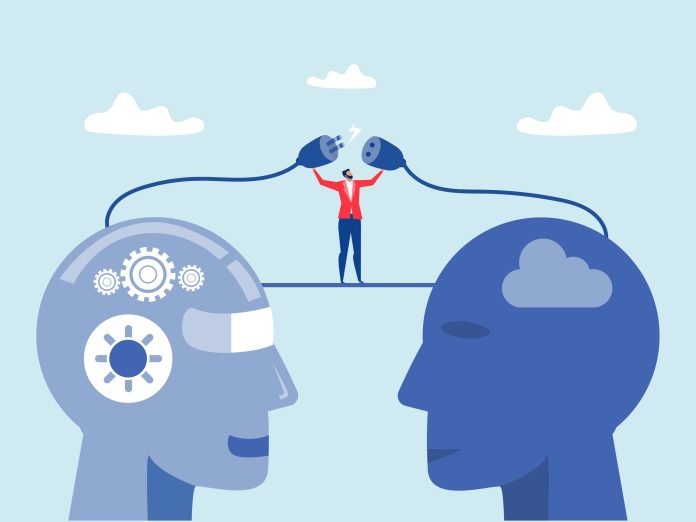
The organizations making the least progress still treat AI as a side experiment, asking people to “use it where it helps” without redesigning the underlying workflow. The ones making serious progress have looked at their processes end to end, identified where intelligence—human or artificial—adds the most value, and rebuilt accordingly. AI has to be woven into the fabric of the work, with human and machine each playing to their strengths.
Analysis: Processing at Speed Without Losing What Matters
Analysis is the clearest example of genuine transformation. Starting a new training program used to mean weeks of immersion—working through policies, product documentation, and process maps to build a coherent picture of what mattered to the audience and the business. Necessary work, but slow.
Now that same body of content can be processed in hours. We surface themes, identify gaps, map knowledge areas, and profile audiences far more quickly than before. But that analysis is only useful because a designer is interpreting the output. AI can tell you what’s there. But it cannot tell you what matters, what’s missing in spirit rather than coverage, or what will change behavior on the job.
That interpretive layer hasn’t gone away. If anything, it has become more important. When volume is no longer the constraint, depth of analysis becomes the differentiator.
Development: Speed Isn’t the Real Story
Yes, we are dramatically faster in development. First drafts come together quickly, assessments can be generated in minutes, and iteration happens at a pace that simply wasn’t possible before. But speed is not the most interesting outcome.
What has genuinely changed is the quality of thinking. When you are no longer constrained by time, you test more ideas. You explore different angles. You don’t settle for the first workable solution simply because the clock is running. AI has not replaced design thinking—it has created better conditions for it.
There is a narrative circulating that AI reduces the need for experienced Learning and Development (L&D) professionals. That has not been our experience. When content is easy to generate, the differentiator becomes judgment. Knowing what not to include. Understanding how people learn, what will motivate them, what will stick beyond the completion click. Those are not problems AI is solving. They are becoming more visible precisely because everything else is faster.
Localization: Language Translates, Meaning Doesn’t
Localization used to be one of the hardest parts of what we do at scale. Move quickly and you risk losing nuance—the way a concept lands differently in Mumbai versus Munich versus Mexico City. Slow down to translate properly in each market, and the cost and timelines balloon.
That trade-off is disappearing. AI gets you most of the way there; people close the gap.
We saw this when adapting a U.S. customer service program for Japan. The content translated well, but the intent didn’t always travel. Concepts that in the U.S. rely on personal warmth and individual empowerment land differently in a Japanese context, where precision, consistency, and respect for hierarchy carry more weight. AI helped us research local customs; local experts then validated reshaped scenarios and behaviors—not just the words—so the program met Japanese expectations of professionalism while delivering on global standards.
The teams doing this well use AI to extend reach. The cultural specialist now works across far more content at a higher level, rather than being bottlenecked in word-for-word translation.
Design Agents: Collaborators, Not Tools
One of the more unexpected developments is the rise of what we now think of as design agents—AI configured to play specific, defined roles within the design process such as analyzing materials, proposing structural frameworks, generating and stress-testing assessments, supporting localization.
They are not autonomous, and they are not making decisions. But they are taking on clearly defined parts of the workflow in a way that feels different from simply using a tool. It is less like reaching for software and more like working alongside a set of very fast, very literal collaborators—ones who never get tired, never lose focus, and will amplify whatever you give them. Which is why the quality of human thinking upstream matters more than ever. If your brief is vague, your output will be, too. If your design logic is clear, the leverage is extraordinary.
The Real Shift: Redesigning the Work Itself
If there is one lesson from the past two years, it is this: The organizations gaining real advantage have redesigned their workflows, getting deliberate about where human judgment lives and where AI takes the load.
Start with what slows you down most—not the flashiest applications but the grinding, repetitive work that leaves your best people doing things that don’t require their best thinking. That is where the compounding gains are. Then hold the line on quality. AI makes it easy to produce a lot; the discipline is knowing when something is good enough and when it isn’t.
And don’t lose sight of why. Efficiency is useful, but it isn’t the point. Better learning is. Learning that changes what people do, not just what they know. That goal hasn’t changed. What has changed is the scale and speed at which we can pursue it.