

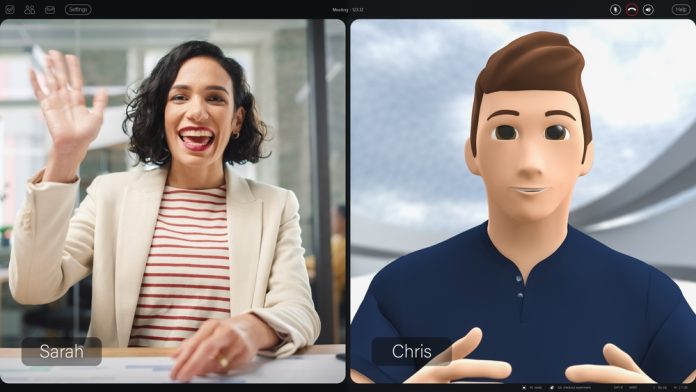
With content now created, shared, and reconfigured at unprecedented speed, employees are expected to process more, respond faster, and operate at productivity levels that would have been unimaginable a decade ago. While the emergence of artificial intelligence (AI) is one of the contributing factors to heightened productivity expectations, it also can be a solution to its own problem. Companies rush to embed AI into every corner of operations, and that includes content creation for training and learning programs.
Technologies leading the charge in AI-involved training innovation include avatars and voices. The market is experiencing rapid growth, with projections for 2030–2034 ranging from approximately $45 billion to more than $270 billion. But do learners want to receive video training content delivered by AI? According to our 2024 Viewer Trends Report, based on insights from 1,000 global participants, 75 percent of respondents are receptive to instructional video content created with the help of artificial intelligence. But Learning and Development (L&D) leaders must find the right balance by leveraging AI-based tools enhancing learning without undermining effectiveness or trust.
Creating with AI Avatars and Voices
AI can influence almost every realm of video creation, from pre-production storyboarding to script creation, audio leveling, noise reduction, and more. When it comes to training videos, AI avatars further simplify video production by offering consistency across content over time. They can be used in place of an original spokesperson, eliminating the logistical challenges coordinating with on-camera talent or having to do it yourself when it’s outside the comfort zone. No need for camera setups, lighting management, or finding the perfect backdrop because AI avatars are always available, versatile, and ready to bring fresh, engaging content to life. Even if an avatar is unnecessary, AI voices provide consistent natural language narration across content while allowing seamless script editing. This enables users to update a video’s voiceover effortlessly without the hassle of re-recording. But unlike most AI tools that are used behind the scenes, there is still a lot of uncertainty among training professionals about using this technology in viewer-facing environments.
An additional 2025 study we conducted surveyed hundreds of full-time workers across multiple English-speaking countries. It held AI versus human viewership experiments in which training videos were identical in content but varied only in narration voice and presenter format. A resounding 92 percent of people agreed that voices that sound clear, warm, and polished make learners pay attention regardless of the source, while poor audio quality can make content harder to follow, learn from, and more distracting. Viewers seemed to focus on the quality of the audio more than whether it was from human or AI. This is where audio editing tools can help creators capture and edit clean audio, reduce background noise, and use AI-powered text-to-speech options that sound natural and professional.
Similar to the AI voice results, the more professional an AI avatar feels, the more likely viewers are to continue watching. This professional appearance can be attributed to the size of the avatar itself. During the avatar-based study, 72 percent of participants agreed that the quality of the video was good when the avatar was in a picture-in-picture layout, but that dropped to 55 percent with the full-screen avatar. Viewers noticed robotic traits such as lip sync issues, eye contact, limited facial movement, awkward blinking, or unnatural breathing in the full-screen version. L&D teams should keep AI avatars small and secondary for most instructional videos by implementing them in picture-in-picture layouts or small frames to allow the avatar to provide guidance and a sense of presence without dominating the screen.
Credibility and Cognitive Comfort
Scaling training with AI is easy, but scaling trust is not. Excessive reliance on AI can cause audiences to lose trust. The AI Voices and Avatars Study notes that many learners couldn’t tell whether a high-quality AI voice was AI or human, which makes transparency an important consideration.
Different countries tend to prefer different levels of disclosure, so L&D teams should consider cultural expectations upfront to make it easier to scale AI narration across a broader training catalog. If there is uncertainty about how it might be received by the audience, err on the side of disclosing it in small text font. When learners know what to expect, they engage more and adapt quicker to AI-supported formats.
As workplace demands accelerate, AI offers a way to meet rising productivity and learning expectations, particularly through avatars and voices that streamline content creation and ensure consistency. By balancing innovation with credibility, L&D teams can leverage AI to scale training efficiently while delivering experiences that are engaging, effective, and trusted.