


March 2018’s Top Reads
More than 11,000 business books are published every year—an overwhelming choice for busy professionals. Therefore, in partnership with getAbstract, Training brings you March’s top three business books recommended to our readers.
Why Failing to Track Your Training’s ROI Results in High Staff Turnover
Measuring the ROI of your training programs can help keep ramp-up times low and allow organizations to react to any trends indicating that trainees either are leaving their role quickly or not ever actually starting full-time employment.
How to Make It Easier to Apply What You’ve Learned in Management Training
Participants who attend management seminars should let their team know they will be trying out new behaviors and ask for their feedback. Doing that takes away all the suspense of whether their team will wonder what’s going on.
The 4 Stages from Motivation to Demotivation
What we really want to accomplish is selfmotivation. When people do things for their own reasons and not yours, that becomes lasting motivation.
You Don’t Need the Newest Technology to Create Better Training Videos
3 best practices you can implement in your current processes to increase productivity and effectiveness of your videos—without spending precious budget dollars on new technologies.
Training Top 125 Best Practice: TREMFYA Product Launch at Janssen: Pharmaceutical Companies for Johnson...
The launch training experience consisted of three phases: pre-launch, launch meeting, and post-launch.
The Monster Under the Bed
Fear of failure is many people’s “monster under the bed.” But the reality is that there is nothing to be afraid of except staying in your comfort zone.
Getting into the Account Planning Habit
4 critical practices your sales team needs for long-term account planning success.
The Truth About Teams—And How to Know What Type of Team You’re on
All teams break down or succeed in specific, identifiable, and replicable ways. No matter the industry, or the part of the world they work in, teams fall into four distinct types.
The Evolution of Blended Learning
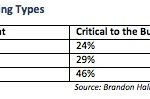
No longer bound to only the classroom or e-learning, it is becoming easier to create experiences that better fit the ways people learn. Companies today are recognizing the importance of delivering more informal and experiential learning, according to the 2018 Brandon Hall Group Learning Strategy Study.