

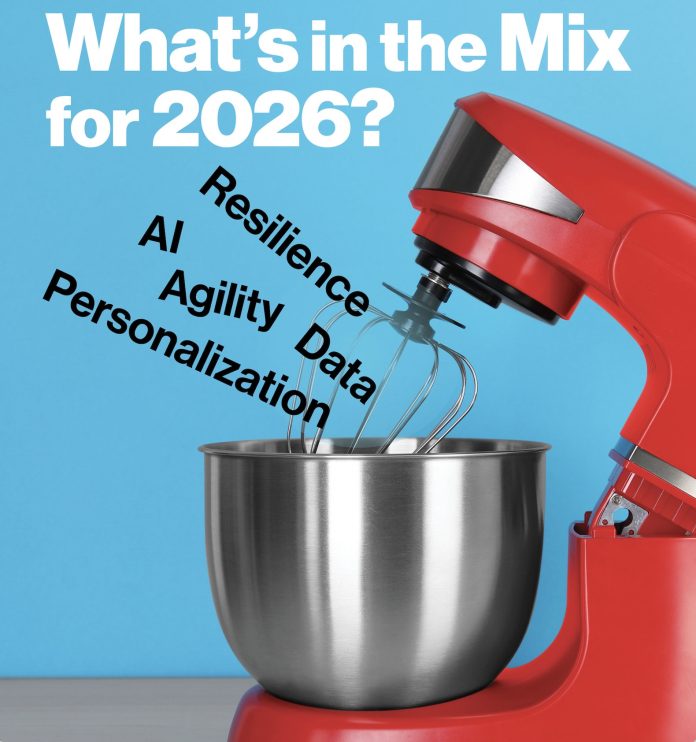
The leading trends set to shape learning and development (L&D) and human resources (HR) in 2026 blend artificial intelligence (AI), data, agility, change management, and hyper-personalization with a dash of resilience. Industry experts highlight remote and hybrid work’s persistent demand, with FlexJobs reporting that flexibility remains central to hiring and retention with workers increasingly prioritizing remote options—even at the expense of pay. Gen Z’s “quarter-life career crisis” and working parents’ need for flexibility underscore the call for intentional employer support and transparent communication to bridge the employee-employer divide.
AI’s transformative influence continues to be a focal point, with organizations moving from anxiety to opportunity as AI shifts from replacing human roles to augmenting them. Learning platforms such as LearnUpon and TalentLMS forecast a shift toward skills-first, hyper-personalized, and modular microlearning, allowing employees to acquire relevant competencies efficiently. Data-driven approaches will tie learning to business outcomes, with continuous coaching, real-time feedback, and scenario-based training replacing traditional reviews and static content.
HR faces mounting pressure to adapt, as the pace of change surpasses organizational capacity, demanding stronger leadership development and closer HR-IT collaboration for effective AI integration. Reports from meQuilibrium, Resume Now, and Wiley stress the need for resilience, mental health support, and ethical AI governance. Companies must create clear, equitable policies around AI usage, privacy, and fairness, while fostering psychological safety and transparent cultures.
The workplace is evolving into flexible, project-based environments, with a focus on employee autonomy, cross-disciplinary “M-shaped” skills, and continuous learning as work and development converge. According to the experts who provided their L&D and HR predictions below, success in 2026 will depend on organizations balancing agility, technological adoption, and human-centered strategies—embedding learning, adaptability, and well-being into the fabric of work to drive innovation, trust, and sustained performance.
FLEXJOBS’ REMOTE WORK TRENDS REPORT FOR 2026
FlexJobs, a site for work-from-home jobs, released its Remote Work Trends Report for 2026. With the remote job market undergoing significant changes over the past year, the annual report details key data and insights from U.S. workers and job seekers on the broad impact, benefits, and continued demand for remote and hybrid work in today’s fast-changing career landscape.
Drawing from FlexJobs’ surveys and remote and hybrid job market insights throughout the year, the report highlights five workplace trends to watch, demonstrating why remote work will remain central to effective hiring, retention, and employee wellbeing in 2026.
- Remote work remains a top job priority. Since 2020, the vast majority of workers have consistently expressed a strong preference for remote and hybrid work over being in the office full time. Given the steady demand for remote jobs, organizations that embrace flexibility as a core strategy in 2026 may be the most competitive in attracting and retaining talent.
According to past reports:
- 76 percent said they would look for a new job if remote work was eliminated because of return-to-work (RTO) mandates.
- 69 percent would accept a pay cut for remote work, an 11 percent increase from 2024.
- 85 percent said remote work is the #1 factor that would make them apply to a job, ahead of having a competitive salary and benefits package (72 percent).
- The great job hop: Career changers seek flexibility. With workers pursuing flexible jobs for long-term career satisfaction, job hopping may grow in 2026. Recent FlexJobs reports signal that despite trends like “job hugging” and low quit rates in 2025, many workers are quietly preparing for a career pivot.
FlexJobs surveys found:
- 69 percent of people have changed or considered changing career fields in the past year.
- 27 percent stated they are “less loyal” to employers.
- 27 percent said they are “not confident” their current job will exist five years from now. Some of the biggest concerns for workers are fewer options for remote jobs (17 percent) and roles being displaced by AI (16 percent).
- Gen Z’s “quarter-life career crisis” may grow, demand employer support. As the multi-generational workforce continues to expand in 2026, employers prioritizing intentional support through greater flexibility such as remote work, tailored mentorship, and clearer pathways for professional growth, may see stronger engagement and long-term retention across all age groups, including Gen Z.
FlexJobs reports found:
- 55 percent of workers have experienced a “quarter-life career crisis, or a period of feeling uncertain, stuck, and anxious about their job between the ages of 20 and 35.
- 77 percent said they think about work even during their time off, and 22 percent said work is on their minds “constantly.”
- 65 percent report feeling stressed or overwhelmed during the average workday.
- 25 percent say they feel excited about their work, while the majority (60 percent) are bored in their jobs.
- Working parents face burnout without flexibility. Companies that expand caregiving-friendly policies and remote work options may see stronger retention and diversity, equity, and inclusion (DEI) outcomes in 2026, as remote and hybrid work is considered a sustainable long-term solution for working parents. FlexJobs data has shown:
- 65 percent of working parents said remote or hybrid work options would better support them.
- 35 percent said their job does not support plans to start or expand their family.
- 60 percent hide family duties to appear more committed at work.
- Employee-employer divide requires transparency, remote job options. “The Great Workplace Divide,” or the gap between leadership direction and employee needs, may intensify in 2026. Companies that address and improve transparency on key issues and expand remote and flexible work options will be better positioned to rebuild trust and strengthen workforce loyalty. According to FlexJobs’ surveys:
- 69 percent said they do not believe the CEO of their company could do their job for a week.
- 75 percent have either experienced or know someone who has experienced bias or discrimination in the workplace.
- 41 percent said their workplace lacks meaningful DEI efforts.
LEARNUPON
DES ANDERSON, CO-FOUNDER AND CTO, LEARNUPON
- Employee learning and customer education. The rapid evolution of technology has caused friction, highlighted by our report finding that 43 percent of L&D professionals fear AI could replace their role. Our prediction for 2026 is that this concern will give way to excitement, as AI transitions from a source of anxiety to an essential tool for success.
Our philosophy is simple: We believe in the future being human-powered, AI-assisted. We view AI not as a replacement for human expertise, but as a powerful partner that strengthens it. - The rise of hyper-personalized learning. By 2026, the era of static, one-size-fits-all learning catalogs will be over. Both employees and customers will expect hyper-personalized, AI-driven learning journeys that adapt to individual needs, behaviors, and goals. This shift will transform learning from a reactive or compliance-driven function into a proactive driver of performance, engagement, and growth.
- Employee learning and people leaders. By 2026, the most successful learning teams will distinguish themselves not by expanding their tech stacks but by optimizing them. As the ecosystem of L&D tools continues to grow, organizations will shift away from chasing new platforms and instead focus on integrating the systems they already rely on. The goal: a connected learning infrastructure that gives leaders a unified view of how learning drives retention, performance, and mobility.
AISLING MACNAMARA, DIRECTOR, LEARNING, ENABLEMENT, AND INCLUSION, LEARNUPON
- Employee learning: By 2026, learning strategies will shift decisively from content-first to skills-first. As organizations place increasing emphasis on retention and internal mobility, learning teams will focus less on producing large volumes of content and more on identifying, developing, and tracking the skills that matter most to the business. For example, companies such as Sonic Automotive are already demonstrating the power of skill-driven learning by achieving 80 percent internal mobility at the general manager level. Looking to the future, leaders will double down on building programs that grow their people and protect organizational knowledge.
- Micro, modular, and personalized: A skills-first mindset demands relevance and adaptability. In 2026, expect to see:
- Microlearning that targets defined skills, allowing employees to build competencies quickly.
- Modular learning architectures, offering flexible pathways aligned to roles, levels, and future career ambitions.
- Curated and personalized content, ensuring that employees learn what they need, and right when they need it.
The question won’t be, “What content do we build?” but “What skills do we need to thrive?” Content will follow. Skills will lead. And organizations that embrace this shift will see higher mobility, deeper engagement, and stronger business outcomes.
BRENDAN NOUD, CEO AND CO-FOUNDER, LEARNUPON
- Employee learning. By 2026, learning teams finally will step into the strategic influence they’ve long been positioned for. With most programs now operating at an “intermediate” level, the next frontier is clear: moving from delivering training to driving measurable business outcomes. As organizations demand clearer links between learning, performance, and retention, L&D will become a critical voice in shaping company-wide strategy.
- Data-driven learning maturity. Fewer than a third of teams today describe their programs as “advanced,” but that gap represents a major competitive advantage. The leaders who embrace analytics, connect learning activities to business key performance indicators (KPIs), and build outcome-first strategies will become essential partners across HR, operations, and the executive team. Expect to see learning tied directly to productivity, career pathing, and talent mobility, turning education into a lever for organizational health.
- L&D as a driver of strategic decisions. As Learning teams deepen their understanding of business priorities and begin speaking in the language of revenue, performance, and workforce resilience, their influence will expand. In 2026, L&D will be a proactive partner in shaping workforce strategy by informing decisions about skills investment, culture transformation, and the capabilities needed for long-term growth. In short, the era of L&D as a “support function” is ending. The teams that embrace data, business alignment, and strategic collaboration will define what learning leadership looks like in 2026 and beyond.”
McLEAN & COMPANY’S HR TRENDS 2026 REPORT
McClean & Company’s HR Trends 2026 Report outlines a clear theme shaping workplaces in the year ahead: The pace of change inside organizations has officially outstripped the capacity of leaders and employees to absorb it.
The data points to an underlying challenge: Organizations across the world face economic uncertainty, political volatility, and a workplace reshaped by the exponential rise and adoption of AI. Notable points from the HR Trends Report 2026:
- Leadership development and capability are declining at the exact moment organizations need it most. When leaders are strong at people management, organizations are 2.3x more likely to be high performers in innovation, yet only 35 percent of HR teams say they’re high performing at developing those leaders.
- HR’s partnership with IT will make or break AI transformation in 2026. While 68 percent of organizations are already implementing AI, only 14 percent have a formal AI strategy. AI is now embedded in day-to-day workflows, but most organizations remain early in maturity and are struggling with the human side of adoption, especially upskilling and supporting people at the speed transformation requires. To put it simply: HR + IT are more powerful together.
- Innovation has surged into a top priority (#10 to #2), even though the cultural and leadership foundations required to support innovation are lagging or missing entirely.
- Culture alignment matters more than ever, but accountability hasn’t caught up. When values, culture, and strategy are aligned, organizations are 2x more likely to innovate, but fewer than half hold leaders accountable for living those values.
- Scenario planning is one of HR’s biggest successes for 2025, but almost no one is doing it. Organizations with structured scenario planning are 2.1x more likely to innovate and 1.8x more likely to execute strategy effectively, yet only 22 percent have it in place.
- Change fatigue is becoming an operational nightmare. Most HR teams say they are not equipped to manage the current volume and speed of transformation.
Ultimately, many organizations are trying to run 2026 playbooks with 2019 leadership and change infrastructure. It isn’t necessarily a conversation around technology overtaking jobs, but more so about organizations running at a pace their people can’t sustain, with HR being pushed, often reluctantly, into a stabilizing leadership role.
meQUILIBRIUM (meQ)
ANDREW SHATTÉ, CHIEF KNOWLEDGE OFFICER AND CO-FOUNDER, meQUILIBRIUM
Grind culture will not lead to high performance in 2026, even as overwork trends such as “996” have their moment in the AI boom. Individuals and organizations that perform best will work the hardest—but they’ll never stop protecting long-term well-being.
In the hundreds of workforce cultures I’ve supported, grind culture has served exactly no one. Not people, not the bottom line. meQ’s Winter 2026 State of the Workforce Report reinforces this: Employees who believe in grind culture experience dramatically elevated burnout, roughly 50 percent higher than their peers.
Conversely, high performers work as hard as possible, but when they’ve done all they can, they protect their well-being. As the meQ report shows, these resilient people believe that hard work pays off but reject sacrificing everything to grind. Successful organizations intentionally foster workforce resilience and proactively invest in manager support to reduce workplace stress.
The report also shows 55 percent of people believe failing to constantly improve means falling behind. This is encouraging for 2026 performance—as long as continuous improvement isn’t just about upskilling, but includes mental health, wellness, and resilience.
ADAM PERLMAN, CHIEF MEDICAL OFFICER AND CO-FOUNDER, meQUILIBRIUM
New data from meQ’s State of the Workforce Report reveals a troubling trend: Healthcare workers are showing the lowest belief in continuous self-improvement across all industries; just 42.9 percent agree that failing to improve means falling behind—compared to 66.9 percent in technology fields. This decline likely reflects chronic exhaustion translating into disengagement from both personal and professional growth.
After years of understaffing, pandemic burnout, and unrelenting pressure, many in the healthcare workforce are losing faith that development, recognition, and advancement are attainable. This is more than job dissatisfaction, it’s an industry-wide reckoning. Unless healthcare organizations take urgent steps to restore belief in the value of growth and support, retention and performance challenges will only compound.
Demoralized healthcare workers rarely walk away abruptly. Instead, they first disengage, cease trying to improve, and eventually leave. Addressing this silent crisis now is essential for any organization hoping to build resilience, foster retention, and safeguard quality care for the future.
STEVE FOSTER, EXECUTIVE CHAIRMAN, meQUILIBRIUM
Deskless and hourly workers will lead the charge on self-improvement and productivity. meQ’s Winter 2026 State of the Workforce Report reveals that nearly 60 percent of manufacturing workers believe in constantly improving or they’ll fall behind. Surprisingly, this is second only to tech employees, long known for their competitive drive.
Deskless workers’ motivation represents untapped, large-scale potential in 2026. They are eager to develop new skills. Companies that invest in accessible, frontline-focused development programs will unlock operational excellence and innovation from employees closest to the work—the backbone of operations, the people closest to customers, and the ones making excellence happen daily.
The workforce’s appetite for growth is there. Smart organizations will act on it, building competitive advantage from the ground up.
BRAD SWINGRUBER, CHIEF EXECUTIVE OFFICER, meQUILIBRIUM
Our world is rapidly changing, and employers must equip their people with the proper support and skills to combat the headwinds of stress and burnout. In 2026, companies will double down on making proactive resilience a core workforce strategy due to its powerful long-term effect, ROI, and performance benefits.
Resilient employees experience a 66 percent greater reduction in burnout compared to their less resilient peers and greater improvements in stress symptoms, according to meQ’s State of the Workforce Report. They are also 33 percent more likely to believe effort leads to reward, while avoiding the toxic tradeoffs associated with grind culture. The compounding advantages accelerate over time, translating directly into improved engagement, optimized mental well-being, and stronger organizational performance.
Managers will continue to be key drivers of proactive resilience strategy (supportive managers reduce employee burnout by 58 percent). Soft skills development and training managers to model resilience will continue to be a competitive advantage.
RESUME NOW’S AI TRENDS FOR 2026 REPORT
Resume Now’s AI Trends for 2026 Report examines eight AI-focused studies conducted across 2025 and highlights what they reveal about where the workplace is heading in 2026.
“2025 proved that AI isn’t just changing how we work, it’s changing how we think about work,” said Keith Spencer, career expert at Resume Now. “Across every stage of the career journey, automation is raising new questions about trust, value, and what makes work meaningful. As organizations move into 2026, AI is no longer an experiment. It is part of daily work. The challenge for leaders is to ensure AI makes people, not just processes, more valuable.”
- The year began with anxiety and uncertainty.
AI Disruption Report: Workers entered the year with fears about AI’s impact and a need for greater transparency and training in AI adoption.
- 9 in 10 workers feared job loss to automation.
- 43 percent of workers said they know someone who has lost a job due to AI.
- 44 percent expected AI to take over some of their tasks within five years.
- 54 percent said their employer is only “somewhat transparent” about AI adoption plans.
- Job seekers learned to compete with and through AI.
AI-Powered Job Search Report: AI began to influence how candidates found opportunities, created resumes, and compared roles.
- 84 percent said AI makes it easier to find jobs.
- 80 percent reported using AI-powered job search platforms.
- 68 percent of workers used AI to write resumes.
- 66 percent believed AI has significantly intensified job competition.
- Companies tried to catch up with governance.
AI Compliance Report: As AI adoption grew, employees struggled to navigate unclear company policies and called for increased AI training.
- 57 percent were concerned about unclear AI policies at work.
- 57 percent admitted to using AI in ways that may violate company policies.
- 43 percent said they need more training on how to use AI effectively.
- 58 percent believed AI policies should be managed by IT, not HR.
- AI moved into hiring at scale.
AI and Hiring Trends 2025: Recruiters and hiring teams turned to AI to streamline the hiring process and improve the decision-making process.
- 91 percent of employers reported using AI to hire.
- 94 percent said AI screening tools are effective at identifying top candidates.
- 73 percent said time-to-hire has improved since implementing AI tools.
- 79 percent believed companies should regulate the use of AI-generated content in job applications.
- The applicant experience became more automated and more frustrating.
AI and the Applicant Report: The use of AI tools among job seekers increased, but the resulting lack of personalization was seen as a red flag by employers.
- 62 percent of employers said they reject resumes that lack a personal touch.
- 78 percent of hiring managers said they look for personalized details as a sign of genuine interest and fit.
- 57 percent had seen a noticeable uptick in AI-assisted submissions over the past year.
- 90 percent reported an increase in low-effort or spammy applications.
- Workers met their “RoboBosses.”
RoboBossing Report: AI-driven management tools entered the workplace. Workers began navigating automated oversight.
- 66 percent of workers said AI in leadership would make the workplace more fair and efficient.
- 73 percent supported AI having a say in major company decisions such as hiring, layoffs, and budgeting.
- 55 percent believed AI could make better promotion decisions than humans.
- 34 percent said they would prefer to report to an AI manager, but 62 percent still preferred a human.
- AI became a daily career companion.
AI Boss Effect Report: AI evolved from a management tool to a workplace companion and advisor.
- 97 percent of workers had asked ChatGPT for advice instead of their manager.
- 77 percent said losing access to ChatGPT would hurt their work.
- 72 percent said ChatGPT gives better advice.
- 49 percent said ChatGPT has been more emotionally supportive than their manager.
- AI Entered Pay and Performance Conversations.
AI in Pay Report: Automation started to influence how compensation and fairness are measured.
- 63 percent expected AI’s role in compensation to grow significantly in the next five years.
- 56 percent said they think AI plays a much larger role in pay decisions than it did three years ago.
- 68 percent believed AI’s involvement makes pay and bonus decisions fairer.
- 94 percent said AI pay algorithms should be reviewed by an independent third party.
TalentLMS’ 2026 Annual L&D Benchmark Report
TalentLMS’ 2026 Annual L&D Benchmark Report shows a growing trend of employees saying they’ll look for another job if their company does not provide them with training opportunities. The survey reaffirms that training is no longer a “nice to have,” but a business necessity, with That said, more than half of employees say workloads leave no time for development.
Another theme that emerged in this year’s study shows that HR managers believe AI will open new roles and automate outdated ones. Specifically, 70 percent of HR managers plan to open new AI-related roles in the next year, yet 47 percent say their AI training is aimed at making jobs easier to automate. Also, HR managers think they are delivering on AI training, with employees disagreeing (a nearly 20-point percentage gap).
Other key findings reveal how performance demands are increasing, squeezing the time available for learning:
- 65 percent of employees say their company has increased performance expectations in the past year.
- 45 percent of employees feel pushed to deliver more at work.
The data indicate that employees are signaling that training directly influences whether they stay or leave. At the same time, HR leaders recognize its power but struggle to make it a sustained priority. With workloads limiting learning time and AI introducing both opportunity and anxiety, the mandate for 2026 is clear: Protect time for development, close the perception gap between leaders and employees, and embed AI literacy across every level of the organization.
WILEY
DANIELLE MCMAHAN, EXECUTIVE VICE PRESIDENT & CHIEF PEOPLE OFFICER, WILEY
The global workforce is becoming more flexible, fractional, and project-based, with continued growth expected in fractional leadership, contract specialists, and gig professionals. In the coming year, organizations will be moving more toward “liquid” workforces—accessing the right skills at the right time rather than focusing on permanent ownership of talent. Learners will expect self-directed training to be much more personalized to their needs and learning style.
MARK SCULLARD, SENIOR DIRECTOR, PRODUCT INNOVATION, WILEY
To deal with the new pace of change that employees are experiencing due to AI and other technological advancements, organizations will invest more in stress mitigation, change management, and resilience efforts. It will take years for people, processes, and cultures to adjust so that this new pace can be handled in a sustainable way.
MATTHEW ADAMS, ORGANIZATIONAL DEVELOPMENT DIRECTOR, PLURALSIGHT
The traditional performance review soon will be replaced by the “continuous performance nudge.” Continuous coaching is not a new concept, but many organizations have struggled to effectively shift their traditional performance management practices from annual reviews to continuous real-time coaching models. Utilizing skills data and real-time project metrics, AI-driven systems eventually will help generate personalized, in-the-moment coaching tips and development resources for both employees and their managers, effectively making the annual review process obsolete and fully embedding development into the flow of work. Performance management will become real-time, personalized, and predictive. I also anticipate that this will create personalized development goals and drive more informed and transparent promotion decisions.
Additionally, as technical skill development is more easily validated and automated, L&D teams will need to rely on highly engaging, simulated environments to develop the difficult, non-automatable skills such as leadership presence, ethical decision-making, and complex collaboration.
BRAD BATESOLE, FOUNDING PARTNER, MADECRAFT
- The end of the hour-long training course. Companies will ditch marathon sessions for bite-sized learning and see completion rates double from 40 percent to 80 percent
- Your learning feed will know your career aspirations better than your manager does. Personalized learning will hit Netflix-level relevance.
- AI fatigue is real, and the backlash is coming. Human-created content scores 4.5 stars, while generic offerings struggle to break 4.
- “What training do you provide?” becomes the interview question that makes or breaks your offer. L&D is 2026’s recruitment weapon.
ALISON BAYIATES, CHIEF PEOPLE OFFICER, NASUNI
In 2026, transparent communication will emerge as the single most important driver of organizational culture. The future of high-performing teams is that they will be built on a foundation of being informed. Organizations are recognizing that culture cannot be built in the dark, and that employees need clarity, visibility, and real-time communication to stay aligned, engaged, and empowered. Just as an AI model cannot succeed with only half the data, a team cannot be expected to do its best work without full context. As a result, HR leaders are investing heavily in systems that promote clarity, dialogue, and accountability—from open town halls and “ask us anything” forums to continuous sentiment tracking and modern engagement tools. These practices reinforce a culture rooted in openness and adaptability, particularly as organizations grow and complexity increases.
At the same time, the acceleration of AI in HR is redefining how this transparent culture can be delivered and sustained. AI is stepping in to handle high-volume, low-impact tasks that once consumed HR teams’ time, such as resume screening, policy benchmarking, and workflow administration, freeing leaders to focus on the human elements of their role such as coaching, culture-building, and strategic alignment. This creates a powerful synergy: When AI removes operational noise, HR teams gain more capacity to communicate, connect, and lead with intention. And when transparent communication is prioritized, employees are more prepared to embrace AI-driven change with trust and clarity.
Together, these trends point to a people-first future, one where technology enhances human connection, and informed teams set the new standard for organizational excellence.
RUSS FRADIN, CEO, LARRIDIN
- Managing the AI divide. The gap between AI-fluent employees and those without the time or interest to learn the technology is widening. Organizations that invest in peer learning and dedicated time for AI training are seeing higher adoption rates.
- Parallel management. Managers now lead humans and AI agents, and they must be trained to gain this new skill. Those who can set clear and data-driven expectations and provide specific feedback for both see project speed and accuracy improve significantly.
- Employee autonomy. Empowering people to customize their own AI tools boosts ownership, raising engagement and decreasing turnover.
TRISTAN BOUTROS, CEO, SCRUM ALLIANCE
As 2026 and an AI-powered world approach, HR has a vital role to play in transforming internal talent into a high-performing workforce that is adaptable, productive, and ready to thrive. The rapid pace of AI adoption, shifting workforce expectations, and the near-constant need for organizations to pivot call for HR to move quickly and continuously adapt. The days of long planning cycles are over; agility is now a key driver for HR to stay responsive and trusted in the face of change.
AI adoption is not only about technology; it’s about how organizations test, learn, and adapt in real time. Agility allows organizations to pilot AI solutions in short, iterative sprints, track outcomes, and fine-tune these solutions based on feedback. By testing and learning as they go, HR teams can align AI initiatives with their unique organizational culture and employee needs. For example, AI is enhancing recruitment by automating candidate screening, but the real value comes from small, rapid sprints where HR teams gather feedback and adjust and scale their AI solutions to improve processes and employee experience before rolling it out on a larger scale.
Agility within HR is not limited to recruitment alone. It extends to onboarding, learning, compensation, and employee engagement. HR teams can approach these functions with agility by organizing work into focused sprints with clear goals, quick feedback loops, and regular reviews. Whether testing AI-driven recruitment tools, personalizing onboarding journeys, or enhancing engagement strategies, agility helps organizations refine and improve quickly, so the end results meet employee and organizational needs alike.
In this new era, HR leaders need a broad skill set that blends human expertise with technical capabilities and a change-enablement mindset. Many organizations are already equipping their HR teams with agile training to lead transformation and facilitate organizational change. This training builds adaptability and fosters collaboration across teams—the skills needed to evolve and thrive in a fast-changing business environment.
By embedding agility into HR practices, organizations can implement AI solutions, drive improvement and ensure that employees are equipped to succeed as business needs evolve. With agility at the core, HR not only accelerates AI adoption but also preserves the human elements that drive organizational success, from employee culture to engagement and beyond.
GUILLEM CASÒLIVA, SENIOR COMPLIANCE & ETHICS ADVISOR OF EMEA & APAC, LRN CORPORATION
As organizations prepare their learning and HR strategies for 2026, a clearer picture of the modern workplace is coming into focus. Ethics, culture, and capability-building are no longer parallel efforts. They are increasingly intertwined, shaping how companies respond to an accelerated technological change, manage risk, and sustain trust in a more complex operating environment. LRN’s latest research suggests that the organizations making the most progress are those treating learning not as a compliance obligation, but as a strategic engine for cultural alignment and informed decision-making.
Cybersecurity is a prime example. As phishing schemes grow in sophistication and frequency, LRN’s research shows that employees remain the last, and often most critical, line of defense against cybersecurity breaches. Forward-looking organizations should treat cybersecurity not as an IT initiative but as a cultural norm, embedding awareness into onboarding, codes of conduct, and daily workflows.
AI governance is another area where companies must move quickly. According to LRN’s 2025 Code of Conduct Report, references to artificial intelligence in corporate codes have tripled since 2023, rising from 5 percent to 15 percent. Yet 85 percent of companies still have not incorporated AI guidance into their conduct standards. As generative and automated systems continue reshaping roles and responsibilities, organizations increasingly should formalize expectations around transparency, responsible use, and human oversight. LRN’s AI ethics training, now completed by more than 100,000 U.S. employees, shows that companies recognize the urgency of preparing their workforce.
At the same time, many organizations face a growing challenge in how leaders and employees interpret culture. Senior leaders often describe their organizations as values-driven, but employees at the front line report a very different lived experience. This disconnect complicates learning efforts because employees are less likely to internalize expectations when leadership behavior feels inconsistent or unclear. Strengthening the credibility of managers and supporting them with practical tools to guide daily decision-making will be essential in 2026.
Generational expectations sharpen these dynamics. Younger employees place a premium on authenticity, psychological safety, and rapid feedback. They also challenge traditional communication styles, signaling a need for learning formats that are more adaptive and grounded in real dilemmas rather than abstract principles.
In 2026, success will depend on cultivating environments where culture, leadership, and learning act in concert rather than in isolation. Employees must feel confident, supported, and equipped to meet both the promise and the disruption that accelerating technological change introduces into daily work.
MICHAEL GOLDFARB, CEO, GUARDIAN HR
In 2026, artificial intelligence isn’t some sci-fi concept somewhere off in the distant future—it’s sitting in our in-boxes, our calendars, and in every part of our digital workplace. We have AI scheduling tools, meeting note-takers, training platforms, and even AI glasses. While there’s a ton of potential here, that potential comes with legal risk for which most employers are unprepared. Like it or not, your employees are already using AI, and the “BYOAI” approach (Bring Your Own AI) is the new norm.
People are quietly installing browser extensions, personal chatbots, and little automations that make their jobs easier. And that’s great…until it isn’t. The moment workers start using these tools, they also can expose your company to privacy issues, inconsistent (and potentially discriminatory) hiring practices, or accidental misuse of sensitive information. Employers have the right to set guardrails around workplace technology. And like any policy, those guardrails need to be clear, written, and (this is the big one) applied consistently. Uneven enforcement is where many companies find themselves in court.
Privacy is going to be a defining theme of 2026. Many AI tools store whatever you type into them, sometimes indefinitely, and sometimes in ways the user doesn’t understand. Without clear guidance, employees can accidentally upload customer data, internal notes, or even pieces of your business strategy into a system that’s not within your control. That’s why employers should create policies outlining what information can be shared, which AI tools are approved, and where the hard lines are.
Accuracy and overreliance are a whole separate challenge. AI isn’t perfect, and it can be flat-out wrong or, in the worst cases, outright discriminatory. There are several class action lawsuits alleging discrimination against companies that use AI in their hiring practices. In HR, that adds another layer of responsibility: making sure AI helps support equal opportunity instead of undermining it. In 2026, HR teams won’t just teach people how to use AI tools, they’ll have to teach them how to question those tools, sanity-check outputs, and apply critical thinking. At the end of the day, the human has to be smarter than the software.
The companies that win in 2026 will be the ones that embrace AI’s efficiency while also building thoughtful, legally sound frameworks around it. And, no, that doesn’t mean asking ChatGPT to write your AI policy. It means working with experts, backed by real attorneys, who can help you create policies that boost productivity, set reasonable guardrails, and protect your team, your data, and your culture.
ERIN MCAULEY CHIEF PEOPLE OFFICER, SPRINGLINE ADVISORY
- Integration and culture strategy. Integration is dead. Co-creation is now, and will be, the new M&A playbook. The idea of absorbing another firm’s culture is severely outdated. True value creation now comes from building something better together. By 2026, the most successful acquirers will approach culture not as an exercise in assimilation but as an opportunity for co-creation. Culture due diligence starts before the ink dries, identifying shared values, complementary behaviors, and non-negotiables. The result ultimately will be integration that feels less like surrender and more like evolution—a new shared identity for a purpose-built future.
Work models and flexibility. The “work from anywhere era” is evolving into “working with intention.” The free-for-all phase of remote work is ending, and we will continue to see more of this. By 2026, flexibility will be designed with purpose, where physical presence has meaning, and autonomy is earned through trust and results. The future of the workplace will balance focus with freedom, allowing employees to choose where to work, but with a clear sense of why they are there together. The firms that get this right will create a culture of intentional collaboration, where flexibility fuels performance rather than fragmentation.
MONA MOURSHED, FOUNDER AND CEO, GENERATION
The job market is entering a period of structural change rather than short-term adjustment in 2026. Signals often framed as workplace “trends” reflect a deeper reality: growing uncertainty about career stability, a reassessment of what entry-level roles should deliver, and a fundamental recalibration of workplace structures.
AI sits at the center of this shift. Our global survey of more than 5,500 Generation alumni across 17 countries shows that 65 percent of entry-level workers are already using AI at work, with many becoming self-taught power users. And they are not just dabbling; they are benefitting, too. Some 94 percent say AI has improved their job performance, and 91 percent report greater enjoyment in their roles.
But the enthusiasm is far from universal. One-in-three entry-level workers still isn’t using AI, most commonly because they lack training or simply don’t understand how AI applies to their day-to-day tasks. This divide risks becoming one of the defining workforce challenges of 2026 unless employers commit to clear guidance, upskilling opportunities, and equitable access to tools.
On the employer side, four distinct approaches have emerged around how AI is affecting their hiring decisions. Some organizations are taking a strategic pause, slowing entry-level recruitment while they redesign roles for an AI-enabled workplace. Others have become AI proficiency hunters, prioritizing candidates who can demonstrate practical fluency with relevant tools. Then there is the search for just the right amount of experience: Employers increasingly value candidates with enough experience to interpret AI outputs, yet paradoxically often overlook older workers who are, in reality, highly capable of adapting. And finally, many companies are adopting trial-run hiring, using 6- to 12-month apprenticeships to observe how candidates work with AI before offering permanent roles.
In all of this, there is a distinct message: Success in 2026 will hinge on adaptability. The workers who thrive will be those who embrace technology and continuous learning, and the employers who succeed will be those who have agile thinking about the roles and skills they need to build and find in their workforce.
SAM NAFICY, CEO, PRODOSCORE
The future of learning and development will be defined by how effectively organizations leverage data to drive growth. Prodoscore’s third-quarter 2025 Productivity Pulse Report found that employees using AI tools were up to twice as productive as those who did not, evidence that technology, when implemented thoughtfully, can elevate both performance and learning outcomes.
In 2026, the most forward-thinking companies will integrate HR, IT, and learning strategies to create environments where people and technology evolve in tandem. HR leaders increasingly are acting as “chief adoption officers,” ensuring that new tools support how people work. When HR and IT collaborate from day one, aligning on user experience, training design, and communication, AI and automation become vehicles for empowerment rather than disruption.
Hybrid work also will mature into what we call “data-led flexibility.” Rather than relying on fixed in-office schedules, organizations will utilize real-time insights to understand where, when, and how teams perform best. This shift transforms hybrid work from a policy into a personalized performance strategy that supports inclusion, autonomy, and well-being.
Performance management is another area ripe for reinvention. Annual reviews are giving way to continuous, AI-assisted feedback loops that provide real-time coaching opportunities. Data offers objectivity (surfacing trends, progress, and strengths), while managers focus on the human side of growth: motivation, empathy, and support.
The lesson for leaders is clear. In 2026, technology will not replace human connection—it will enhance it. Organizations that blend AI insights with a culture of coaching and continuous learning will unlock higher engagement, more equitable evaluations, and innovative ways to help employees reach their full potential.
ROB PORTER, eLEARNING EXPERT, COSO CLOUD
As AI moves from buzzword to business backbone, corporate learning is on the brink of its most transformative evolution yet. CoSo Cloud, a leader in secure, compliance-driven eLearning, predicts that by 2026, AI will redefine how organizations train, upskill, and measure performance, shifting learning from a structured event to a dynamic, data-informed experience. AI will move beyond being a support tool to become the central learning assistant, guiding employees through personalized, real-time learning journeys while providing insights that help organizations refine training strategies based on actual behavior rather than assumptions. As the traditional learning management system gives way to more connected and intelligent ecosystems, learning will become seamlessly embedded into daily workflows, integrating with HR, customer relationship management (CRM), and productivity tools to deliver knowledge exactly when and where it’s needed. This shift will push L&D teams to act more like experience architects, designing agile, interoperable systems that support continuous learning at scale.
At the same time, compliance will emerge as the new competitive advantage. With AI and analytics now central to how learning is delivered and measured, organizations will be under pressure to ensure transparency, traceability, and security in every learning interaction. Regulated industries such as government, healthcare, and manufacturing are already setting the bar, demanding platforms that meet rigorous accessibility and auditability standards. Forward-thinking companies will follow suit, recognizing that trust and accountability in learning systems are not only regulatory necessities but strategic differentiators. Together, these shifts mark the arrival of an intelligent, interconnected, and compliant learning era, one where AI-driven insights empower employees, streamline operations, and create measurable value across the enterprise
DAVID RICE, EXECUTIVE EDITOR, PEOPLE MANAGING PEOPLE
In my opinion, 2026 has to be the year that L&D moves beyond traditional skills training toward something more fundamental.
The dominant trend will be helping people understand how to collaborate with AI more effectively. This means not just teaching employees to use AI tools but developing the human capabilities that will matter most: critical thinking, creative problem solving, emotional intelligence, and adaptive learning. AI will continue handling more routine cognitive work, so L&D must prepare people for roles we haven’t fully defined yet.
I think we’ll see a shift toward continuous career reinvention programs rather than one-off reskilling initiatives, because the skills landscape is going to change quicker and quicker. Organizations that treat their people less like resources and more like long-term investments will develop learning ecosystems that support multiple career pivots over the employee lifecycle, not just the next quarter’s objectives.
Psychological resilience and change adaptability have to become core L&D pillars as part of that. The anxiety around AI displacement is real, and AI integration has proven to create more work not less, which is not helping an already out-of-control burnout epidemic. Organizations can address this directly through programs that help employees understand their evolving value and build confidence amidst uncertainty.
Finally, I expect growth in purpose-driven learning, connecting skill development to meaningful work and societal contribution. As automation reduces the number of people businesses “need,” the most human-centered organizations will focus L&D on cultivating work that matters, not just work that’s profitable. In the next few years, we’ll see some governments institute human quotas for businesses, and the real work in complying with those quotas will be helping people define their value and purpose.
ELISSA ROSSI, VICE PRESIDENT, COMPLIANCE SERVICES, TRALIANT
Workplace violence prevention is moving from a “security issue” to a core L&D and people strategy priority, and 2026 will be the year more organizations treat it that way. The continued headlines are a grim reminder: Incidents can unfold in retail stores, hospitals, field sites, campuses, and corporate offices. But for L&D leaders, the bigger trend is what happens before a crisis. Most workplace violence begins as lower-level behaviors, threats, intimidation, harassment and escalating conflict, that often go unreported until they disrupt operations or harm someone.
Risk to employers is rising. Employers face sharper expectations and accountability. SHRM and other leading voices continue to emphasize the employer’s duty to provide a safe workplace, and states are translating that expectation into requirements. California’s workplace violence prevention mandate and New York’s retail-focused requirements already provide a model. Other states are considering similar legislation, and organizations operating across jurisdictions are realizing they cannot train to meet the minimum standard in one location and hope it scales everywhere else. Even in jurisdictions without workplace violence prevention requirements, OSHA has and will continue to sanction employers for failing to prevent harm from workplace violence. In addition, if an employee is injured in a workplace violence incident, the employer can face civil liability.
Modern training builds readiness, not just awareness. For L&D, the opportunity is to build modern training that fosters readiness, not just awareness. Effective workplace violence prevention, de-escalation, and active shooter response training should be practical, role-specific and reinforced over time. That means moving beyond one-and-done eLearning toward ongoing, blended learning paths, including:
- Practical de-escalation techniques for frontline teams and managers
- Immersive learning where employees assess workplace violence threats and work through realistic incident scenarios.
- Clear “what to do next” instructions for all types of potential workplace violence, from customer threats to active shooter incidents that employees can recall under stress.
Preparation is the point. Preparation is critical because performance in high-stakes moments is rarely improvised; it is learned through training. The goal is to train employees to have the confidence to recognize early warning signs, respond appropriately and report concerns without fear of retaliation. When training is designed as a system—aligned to policy, reporting channels, and incident response—it strengthens culture and reduces risk.
In 2026, L&D leaders will be measured not by completion rates, but by capability and execution: how quickly teams can de-escalate and act when it matters most.
NELSON SIVALINGAM, CO-FOUNDER AND CEO, HOWNOW
- Shift from T- to M-shaped skills. We’ll see a shift from T- to M-shaped skills next year as organizations look to build employee skillsets across multiple domains. AI is increasingly able to replicate the deep expertise that once defined T-shaped talent. When specialist knowledge can be automated or augmented so effectively, its value—while still important—is no longer what sets people apart. What AI cannot yet do is integrate insights across domains, apply judgement in ambiguous contexts, or connect dots that don’t obviously belong together.
That integrative, cross-disciplinary intelligence is uniquely human, and it’s becoming the new competitive advantage. This is why we’re seeing a shift toward M-shaped skills: people with depth in key areas but also adaptability, cross-functional literacy, and the ability to bridge disciplines.
Organizations are already changing how they hire and develop talent as a result, prioritizing those who can navigate complexity, collaborate across boundaries, and pair AI-enhanced expertise with human-level problem solving.
Companies increasingly need designers who can think like product managers; product managers who can think like engineers; and engineers who can think like designers. In response to this, employers will accelerate cross-skilling and upskilling across multiple specialties next year.
Alongside this, employees are looking for new ways to deliver value, stay relevant, and compete with AI itself. AI now can write brilliant code, so if the only thing an engineer can bring to the table is coding, they will become obsolete. Organizations want (and need) people who can shape and deliver the end -product experience—and that requires the right mix of human insight, expert knowledge, and an ability to join the dots between different domains.
- AI-literacy and data literacy skills.
- AI upskilling will become mandatory: Building AI and data literacy skills will be a top priority for almost every organization this year. As adoption gathers pace, this also will become a formal learning requirement built into every employee’s development goals and learning pathways.
- A human-centered approach: At the same time, we’ll see more scrutiny as to why many organizations are not yet seeing productivity gains from their AI investments—something that comes down to a lack of human-centered thinking. The only thing that stands in the way of AI adoption now is humans themselves. To unlock productivity and efficiency gains, employers must enable humans to use AI in a meaningful way; show them the value; bring them along on the journey; and create buy-in.
- More value realization: The futility of blunt AI-first strategies also will become more obvious in 2026. Too many organizations are implementing AI for the sake of AI. There’s a sense that if they’re not using it, their organization will be left behind. And while that’s true, if they’re not using it in the right way, they simply won’t reap the benefits. This is why a human-first approach is critical to maximizing the value of AI—the real potential that goes far beyond the day-to-day writing of e-mails and slide decks.
- Learning and work will become one. Most people still look at work as an execution problem. This also will change this year as more organizations and employees start to look at work as a learning problem. The shift is from work being an execution problem to work being a learning problem. Work and learning will become one and the same. More and more organizations also will deploy AI learning agents to connect knowledge and execution in the flow of work, enabling employees to access the knowledge and coaching they need to put learning into practice.
AUDRA STANTON, HEAD, PRODUCT, NINETY.IO
- Continuous learning replaces annual reviews. Company L&D initiatives are rarely what teams look forward to, as many of us can remember a training day as disruptive, slow-paced, or boring. Given the brain’s natural unease with change and its habit of taking even well-meant feedback to heart, traditional methods often make learning feel more pressure-filled than it needs to be, rather than helping it become a comfortable habit. Continuous feedback and learning is one of the most impactful changes leaders can make for their people, as well as their company’s growth. When feedback and skill development become regular, routine parts of the workday rather than isolated events, the emotional barriers start to dissolve and growth becomes natural and a part of work rather than something separate from work.
- The rise of vulnerable leadership. Leaders need to be intentionally taught how to embrace and communicate vulnerability. It’s not easy and often goes against the natural instincts one has in terms of desire to be perceived as a strong leader. There’s a long-standing misconception that admitting mistakes or sharing decision-making struggles somehow weakens authority. In reality, it does the opposite. When I work with new teams, I talk openly about a lesson I’ve learned the hard way—maybe a miscommunication that missed the mark or a bad decision and its consequences. Doing this immediately flattens the hierarchy and communicates, “We are all human here, and we are in this together.” The most approachable leaders earn trust by not being perfect, but by being human. Vulnerability isn’t a personality trait reserved for a select few who choose to where their heart on their sleeve—it’s a learnable leadership skill that directly elevates engagement, fosters belonging, and prioritizes growth and acceptance across a team.
- The change management crisis: In 2026, we’re going to see increased demand for automated change management solutions. Currently, AI is advancing at such a rapid pace that companies struggle to manage change effectively, creating a crisis. Effective change management requires time, care, and early adopters. As new AI tools constantly hit the market, companies face a choice: Wait a month for proper change management or implement them quickly and deal with the fallout. Most are choosing speed, and change management has fallen by the wayside. There’s space for solutions that can automate change management, making it less of a mental lift while still honoring the human need for understanding and control.
JONATHAN THORP, CEO, QUANTUM CONNECTIONS
In 2026, workplace civility will become a strategic necessity. The tension between control and connection is already visible in return to office policies, and the organizations that lead will be the ones that prioritize trust over compliance. Our Net Connected Score research shows that when employees feel seen and heard by their managers, profitability increases by 38.7 percent. That is not a soft skill outcome. It is a business performance signal. Civility is no longer about being nice. It is about creating psychological safety, shortening feedback loops, and keeping people engaged through change. Leaders who learn to dialogue—clearly, calmly, and consistently—will outperform those who issue mandates without dialogue.
KARIE WILLYERD, CLO IN RESIDENCE, SKILLABLE
In 2026, CLOs and learning leaders face unprecedented pressure to modernize learning strategies in ways that drive agility, validated performance, and organizational resilience. AI is accelerating expectations, skills are becoming a core business currency, and learning functions are being asked to respond not with theory but with outcomes. Amid the noise of new tools and trends, Learning leaders are asking the same question: What learning matters for our people and how do we deliver it effectively?
With an overwhelming number of new tools, platforms, and AI-driven learning experiences emerging every quarter, CLOs will return to foundational learning science to cut through the hype. Merrill’s Instructional Design Principles, the 70-20-10 model, and Bloom’s Taxonomy will re-emerge as grounding frameworks for the tactics and technologies that CLOs invest in. Business outcomes will act as a North Star for many CLOs, influencing what learning experiences they offer their people based on what the business wishes to achieve. Learning platforms that can prove value such as increases in sales pipeline or reduced customer support tickets, instead of just content completions and engagement, will stand out in a crowded market.
As AI increasingly handles lower-order cognitive tasks, learning strategies will lean heavily into human capabilities: analysis, evaluation, creativity, and systems thinking. Working alongside AI will require a set of new “evolved” skills that allow people to understand how to use an AI tool to get to an outcome, through iteration and (sometimes) failure. This cannot be taught through theory alone, so more organizations will bring in scenario-based training into their learning experiences to help people get hands-on with AI. More hands-on challenges also will be set as part of assessment and certification for using an AI technology, to reflect the need for people to practice and experience AI first-hand.
AI will deepen learning personalization, not just for content and recommendations but in generating realistic scenarios and practice environments for people to test, stretch, and apply their skills. One scenario, such as defending against a cyber-attack, will be more complex for one expert learner, and another will be generated for a learner with a more rudimentary understanding. All will be based on skill level, performance history, and individual role or project needs. Scenario-based, adaptive experiences will become a baseline expectation in most learning strategies, rather than a premium add-on, because of AI.
CLOs in 2026 will succeed by grounding innovation in proven learning principles, using AI to scale personalization and practice, and designing experiences that prioritize capability over content.